Skyactiv и skyactiv g в чем отличие
Short answer: both are SKYACTIVE-G, but it’s equally correct to refer to them as SKYACTIV engines (Mazda uses all caps for these names, for some reason). The name or designation has nothing to do with the manifold as such.
Long answer:
The official designation for these 2 engines is:
SKYACTIV-G 1.5 for the 1496cc engine
SKYACTIV-G 2.0 for the 1998cc engine
SKYACTIV is the name of the concept behind the current generation of fuel-efficiency related technologies developed by Mazda. The suffix basically just indicates the type of component it applies to.
So SKYACTIV-G is simply SKYACTIV as it applies to Gasoline (aka petrol) engines. There’s also SKYACTIV-D for diesel engines.
There are other suffixes for different components, such as transmissions and the chassis.
__________________
▇ 2017 Mazda MX-5 SKYACTIV-G 160 GT-M + Sports Pack, Eibach Pro-Kit, OZ Formula HLT, Michelin PS4
| Herko_ter_Horst |
| View Public Profile |
| Find More Posts by Herko_ter_Horst |
| Herko_ter_Horst |
| View Public Profile |
| Find More Posts by Herko_ter_Horst |
Third gear
Join Date: Nov 2017
Location: Dallas
Third gear
Join Date: Nov 2017
Location: Dallas
Originally Posted by poniliu
The 2.0L has separate collector for each cylinder:
Just a quick note. SKYACTIVE engines use what’s called a «Tri-Y» header design. Two cylinders that are 360-degrees out of time (on a 4-cylinder engine) share a y-shaped collector. The other two share a second collector. Then those two collectors are merged into a third y-shaped collector (which you see in the photo immediately before the catalytic converter.
The reason is to separate exhaust pulses as much as possible, to prevent (or at least minimize) pulses from one cylinder arriving at another cylinder during *it’s* exhaust stroke, making it more difficult for the exhaust gases to escape and in some cases forcing exhaust gases back into the cylinder.
This is also why long-tube headers are so effective (and long-tube Tri-Y headers even moreso.) However, packaging prevents long-tube headers in the MX-5, so the Tri-Y is a good compromise.
Tri-Y headers have been in use since at least the 1950’s.
Sixth Gear
Join Date: Feb 2008
Location: Ann Arbor, MI
Posts: 7,794
Sixth Gear
Join Date: Feb 2008
Location: Ann Arbor, MI
Posts: 7,794
As mentioned, Skyactiv-G (note the lack of an «e») are just the gasoline version of the Skyactiv line of engines. Mazda also has Skyactiv-D engines and an upcoming Skyactiv-X engine using spark-controlled compression ignition (SPCCI) of gasoline, which is their version of Spack-Asisted Compression Ignition (SACI). Mazda also uses the Skyactiv name to refer to their manual and automatic transmissions, unibody designs, and platforms.
__________________
2009, DD/HPDE/autocross. 2004 MSM, sold. 1995, sold. 2010 Mazda3, hers.
Wheels flew off
Join Date: Feb 2000
Location: San Diego, CA
Posts: 29,662
Wheels flew off
Join Date: Feb 2000
Location: San Diego, CA
Posts: 29,662
Originally Posted by gt40mkii
Just a quick note. SKYACTIVE engines use what’s called a «Tri-Y» header design. Two cylinders that are 360-degrees out of time (on a 4-cylinder engine) share a y-shaped collector. The other two share a second collector. Then those two collectors are merged into a third y-shaped collector (which you see in the photo immediately before the catalytic converter.
The reason is to separate exhaust pulses as much as possible, to prevent (or at least minimize) pulses from one cylinder arriving at another cylinder during *it’s* exhaust stroke, making it more difficult for the exhaust gases to escape and in some cases forcing exhaust gases back into the cylinder.
This is also why long-tube headers are so effective (and long-tube Tri-Y headers even moreso.) However, packaging prevents long-tube headers in the MX-5, so the Tri-Y is a good compromise.
Tri-Y headers have been in use since at least the 1950’s.
It makes one wonder if Mazda has been working on improving the ND’s header design. The Mazda3 version of the Skyactiv 2.0 was able to make similar HP using regular gas because there was room for a longer header.
It makes sense that Mazda would eventually find a way to fit an improved header into an ND.
__________________
2016 Soul Red LE , 2001 Classic Red LS, 1992 Classic Red «B»
Over 330,000 miles of nothing but smiles during more than 30 years of Miata ownership!
| Mark Booth |
| View Public Profile |
| Find More Posts by Mark Booth |
| Mark Booth |
| View Public Profile |
| Find More Posts by Mark Booth |
SkyActiv G or SkyActiv X Engine for Long Distance Trips?
I currently have a 2017 Mazda 3 2.0 petrol manual (UK Sport Nav spec.) and am looking to change. I would be interested in another Mazda 3 but the new model has a lower ground clearance and won’t satisfy my requirements. I do long distance trips on which Mazda 3 achieves 52 mpg (UK) and about 42 mpg in local driving. My main dislike of the car is excessive road / tyre noise on rougher tarmac.
A Mazda CX-30 (SE-Lux trim in the UK) looks good on paper and may be more refined for long distance trips than my current car. I’ve seen various car reviews which generally recommend to pay more for the SkyActiv X engine but I’m not convinced. The SkyActiv X engine is reported to be harsh when cold and at low speeds, not as rapid as the power suggests and there is a diesel-like clatter at idle and low revs. The SkyActiv X version is also lower geared resulting in higher engine rpm compared to the SkyActiv G. Based on UK prices, I will need to drive 140,000 miles to recoup the extra purchase cost of the SkyActiv X in fuel savings which is never going to be realised for me.
Are CX-30 owners content with the performance, refinement (noise) and fuel consumption of the their SkyActiv G cars (manual) on long distance motorway trips? My current Mazda 3 can handle the length of the M1 in 6th gear at 70 mph without needing the change down at c. 2400 rpm.
Your Questions Answered: Mazda’s Skyactiv technologies


It’s been more than a decade since the 2012 Mazda3 offered up Mazda’s first-ever Skyactiv engines and transmissions. Shortly after, the 2013 CX-5 was the first full Skyactiv model, following with additional components and design.
Advertisement 2
Story continues below
This advertisement has not loaded yet, but your article continues below.
Article content
We apologize, but this video has failed to load.
Try refreshing your browser, or
tap here to see other videos from our team.
Your Questions Answered: Mazda’s Skyactiv technologies Back to video
We apologize, but this video has failed to load.
Try refreshing your browser, or
tap here to see other videos from our team.
Play Video
Right around the time the first Mazda models rolled out of their factories wearing shiny little “SKYACTIV TECHNOLOGY” badges on their trunks and tailgates, Mazda TV commercials were using the familiar ‘Zoom-Zoom’ slogan as part of a campaign promoting the automaker’s new, more sustainable engineering philosophy. The idea was to create a brand name for a gene pool of new and upcoming technologies, systems, structures, and component designs that would power the next generation of fuel-efficient Mazda models. With Skyactiv branding, Mazda aimed to create an automatic blip on the mental radar of shoppers, an increasing number of whom were seeking the safest, most fun-to-drive, and most fuel-efficient models on the scene.
Advertisement 3
Story continues below
This advertisement has not loaded yet, but your article continues below.
Article content
Learn more about the cars
2024 Mazda CX-5
3.60 out of 5
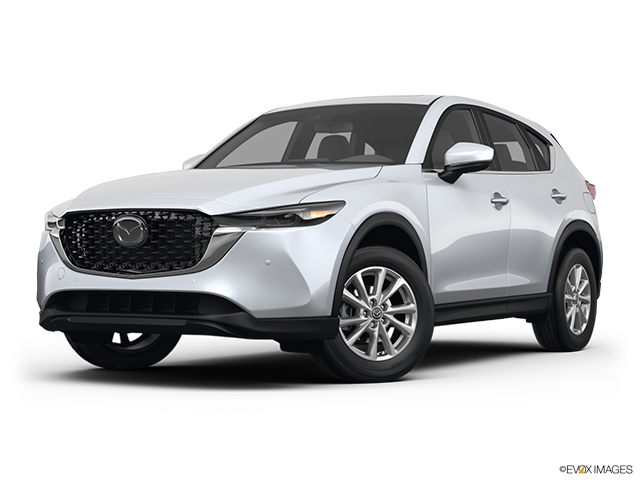
MSRP $32,250 to $44,950
Add to Compare Remove Vehicle
2024 Mazda CX-30
3.00 out of 5
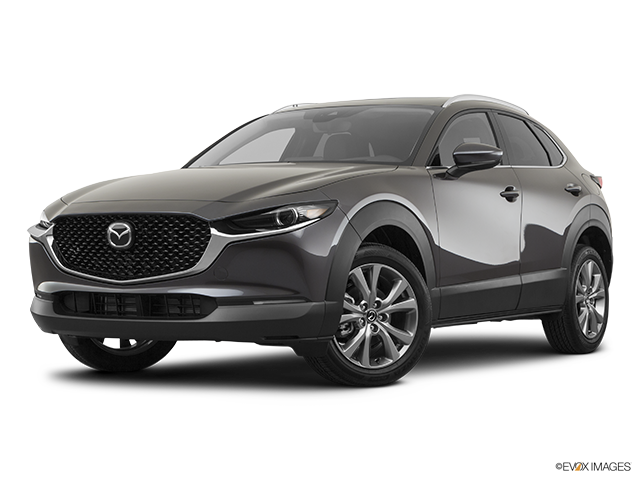
MSRP $28,150 to $40,700
Add to Compare Remove Vehicle
2024 Mazda MAZDA3
3.70 out of 5
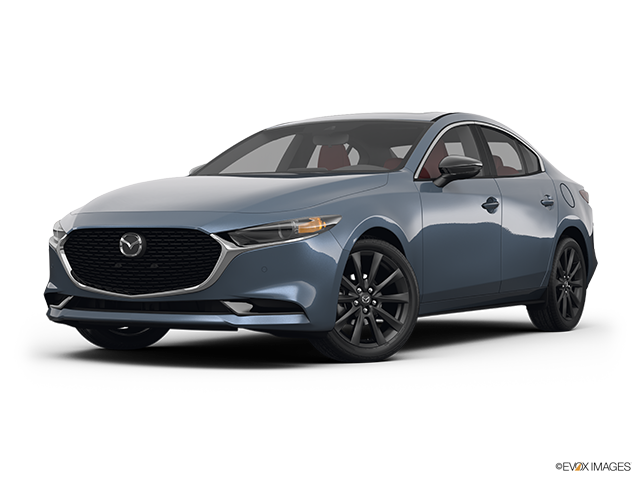
MSRP $24,200 to $37,400
Add to Compare Remove Vehicle
2022 Mazda CX-3
3.60 out of 5
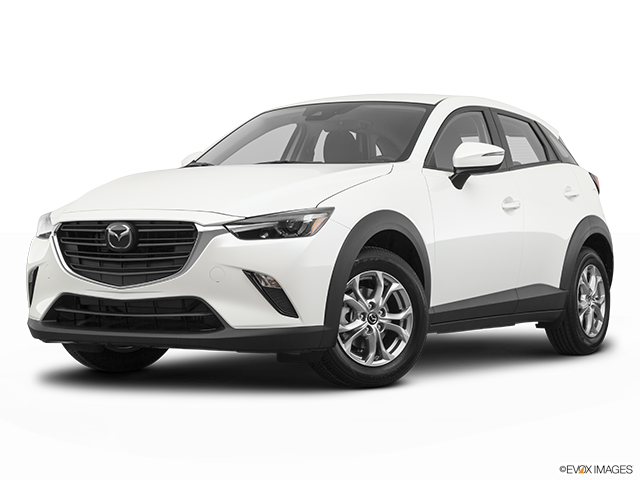
MSRP $22,050 to $32,050
Add to Compare Remove Vehicle
2023 Mazda CX-9
3.50 out of 5
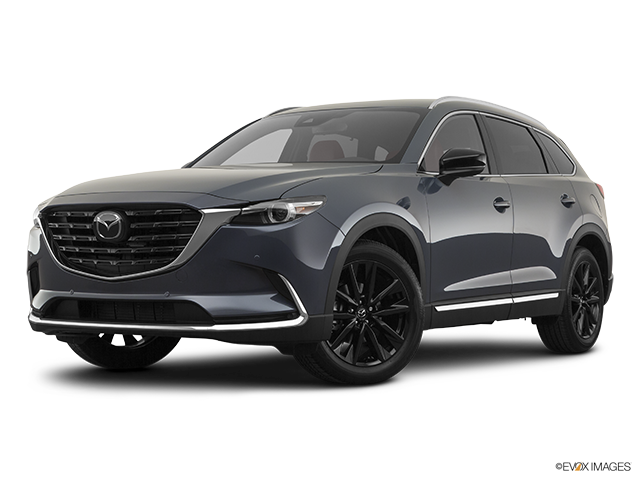
MSRP $42,050 to $54,050
Add to Compare Remove Vehicle
Below, we’ll answer 11 of the internet’s most popular search questions about Skyactiv technology, with help from Daniel Grenier, Mazda Canada’s National Manager of Technical Services.

Are Skyactiv engines Direct Injection (DI)?
Yes. Like most modern gasoline engines, Skyactiv engines use a fuel injector that sprays gasoline at high pressure directly into the combustion chamber. This bypasses the intake valves and delivers fuel directly to the optimal location for combustion. Benefits include a cooling effect that helps enable higher compression ratios for added efficiency, and improved fuel and air mixing, for cleaner, fully optimized combustion.
Does Skyactiv require premium gas?
No. In North America, Skyactiv engines are built to run on regular-grade gasoline. Using pricier premium-grade gasoline may enable a torque and horsepower increase (depending on the year, model, and equipped engine) but 87 octane gas is all the Skyactiv engine needs to deliver its rated output figures.
Advertisement 4
Story continues below
This advertisement has not loaded yet, but your article continues below.
Article content

What does “Skyactiv” mean on a car?
The “Skyactiv” badge you see on the back of Mazda models means that vehicle is fitted with exclusive equipment, designs, and technologies that work hand in hand at improving efficiency and performance.
Shoppers can take the Skyactiv badge as Mazda’s seal of approval that the machine in question meets high standards of efficient performance.
Is Skyactiv technology worth it?
Most owners and experts say so. Remember, Skyactiv technology is built into Mazda models as standard equipment. It’s not an add-on package or option, but rather a built-in array of designs, equipment and features working together to create a crafted driving experience — specifically, one commonly noted for safety, pleasing dynamics and good fuel efficiency.
Advertisement 5
Story continues below
This advertisement has not loaded yet, but your article continues below.
Article content

How does Skyactiv-G work?
According to Grenier, Skyactiv-G is the world’s first gasoline engine for mass-production vehicles to achieve a high compression ratio of 14.0:1 on European-spec models; and a still-impressive 13.0:1 for North American models. The slightly lower compression ratio of North American models corresponds with our preference for vehicles that run on regular-grade fuel, not pricier high-octane gas. With a lower compression ratio in North American models, drivers get rated power output on 87-octane gasoline.
That high-compression-ratio characteristic of Skyactiv engines helps extract more energy from fuel, resulting in a 15-per-cent increase in fuel efficiency and torque versus Mazda’s non-Skyactiv engines. This benefits everyday driving and response at low to mid-engine speeds.
Advertisement 6
Story continues below
This advertisement has not loaded yet, but your article continues below.
Article content
“A 4-2-1 exhaust system, cavity pistons, multi-hole injectors, and other innovations enable the high compression ratio” Grenier explains, adding “compression ratio, fuel economy, and torque vary according to market, carline and transmission.”
Recommended from Editorial
Mazda’s moving into the premium segment with all-new global models
Long-term test update: 2023 Mazda CX-50
The Skyactiv engine is only part of the equation, of course. For instance, Mazda’s Skyactiv-Drive transmission combines the benefits of various types of automatic transmission into a single unit to achieve a 4 to 7 per cent further improvement in fuel efficiency.
“A dramatically widened lock-up range improves torque transfer efficiency and realizes a direct driving feel that is equivalent to a manual transmission,” Grenier says.
Advertisement 7
Story continues below
This advertisement has not loaded yet, but your article continues below.
Article content
The powertrain team are housed within the Skyactiv-Body, engineered to meet top crash testing criteria while being both lighter and more rigid, to the benefit of handling and efficiency. From that basis the Skyactiv-Chassis employs further weight-reducing efforts and enhanced suspension and steering functions to deliver a more engaging drive.
What are Skyactiv vehicle dynamics?
Part of the Skyactiv series, Skyactiv vehicle dynamics technologies provide integrated control of the engine, transmission, chassis and body to enhance the feeling of connectedness between the car and driver. Mazda calls this philosophy Jinba-Ittai, roughly translated from Japanese to mean ‘the rider and horse as one’.
This signature driving feel is enhanced with Skyactiv vehicle dynamics features, including G-Vectoring Control, which enhances chassis performance using the engine.
Advertisement 8
Story continues below
This advertisement has not loaded yet, but your article continues below.
Article content

When your vehicle decelerates, its front end becomes heavier. You notice this when you brake, as the front of your car tends to squat down. Even releasing the throttle pedal can shift weight to the front of your car, but by a far smaller amount. Ultimately, weight transfer between the front and rear of the car can be generated easily, just by working the throttle or brakes.
The computer brain in Mazda’s with G-Vectoring Control system capitalizes on this. When drivers steer the car, the system uses its electronics to briefly adjust the engine’s throttle signal in sync with their steering input. The throttle adjustment happens in a blink and is invisible to the driver, though it effects sufficient weight transfer onto the front wheels to improve cornering feel and handling.
Advertisement 9
Story continues below
This advertisement has not loaded yet, but your article continues below.
Article content
Benefits include improved driver confidence, reduced fatigue, and enhanced peace of mind enabled by more stable vehicle motion and handling. From the driver’s seat? Expect a high-precision feel to the handling, and an easier time placing the vehicle in corners.
Where did “Skyactiv” come from?
Skyactiv technology evolved from a drive to create cars and crossovers that are always evolving to deliver more safety, efficiency, and driving pleasure. It signifies a special approach to designing and building cars, and Mazda says the term itself evolved from “The Sky’s The Limit,” a catch-phrase once used to describe a commitment to go ‘above and beyond.’

Which Mazda models have Skyactiv?
“Since 2013, all new models were manufactured with the Skyactiv technologies, which includes engine, transmission, chassis, body, and the suite of safety technology” explains Grenier.
Advertisement 10
Story continues below
This advertisement has not loaded yet, but your article continues below.
Article content
What is Skyactiv-X and which models have it?
Skyactiv-X is a first-of-its-kind combustion engine technology that uses a new very-high-compression engine design. The extreme-compression combustion characteristic of the Skyactiv-X engine takes current Skyactiv engine tech to the next level, promising to reduce emissions while improving torque by 10 to 30 per cent, and using less fuel than Mazda’s Skyactiv-D diesel engine to do it.
“Skyactiv-X has been available on Mazda3 in Europe, Japan, and other markets since 2019, and CX-30 in 2020, though the widely-anticipated technology has yet to make it into production for the North American market,” explains Grenier.

Offering the best of both diesel and gasoline engines, Skyactiv-X uses a new technology called Spark Controlled Compression Ignition. On regular gasoline, the Skyactiv-X engine compresses a very lean mixture of air and fuel under extreme pressure. A spark plug ignites only a small, highly-dense amount of this mixture, the rest of which ignites under the pressure created by the initial spark. This allows the air-fuel mix to burn faster, and more completely.
Advertisement 11
Story continues below
This advertisement has not loaded yet, but your article continues below.
Article content
“Engineers analyzed every detail from the piston shape to the swirl pattern of the fuel-air mix. As is the Mazda way, it’s those tiny details that make a huge difference,” he says.
How long do Skyactiv engines last?
“Thanks to the engine management system (PCM), the quality of the material used in the engine, and the low friction of the engine components, when properly maintained, the Skyactiv engines will last a very long time,” Grenier says.
“This allowed Mazda Canada to offer an unlimited mileage warranty for the last few years. While we keep improving the engine design and efficiency, Skyactiv-G 2.0L and 2.5L have been used in all of Mazda’s vehicles in Canada for over a decade.”

Is Skyactiv a hybrid?
Not here, not yet. According to Grenier, Mazda doesn’t currently offer Skyactiv engines with hybrid technology for the North American market.
“Mild-hybrid versions of the Skyactiv engines are now available in some other markets, and will be introduced in North America as more of Mazda’s models receive electrification,” he says.
Mazda has committed to all models having some form of electrification by 2030. Mazda was named the most fuel-efficient manufacturer in the U.S. for five years in a row, even without a hybrid system.
Share this article in your social network
Share this Story : Your Questions Answered: Mazda’s Skyactiv technologies
Justin Pritchard
Justin Pritchard is a Sudbury, Ontario based automotive journalist and award-winning presenter, photographer, videographer and technical writer. Every week, Justin uses his keyboard, voice and cameras to share his latest automotive reviews and discoveries with his audience, via multiple Canadian television programs, print and online publications.
Currently
Technical Writer, Videographer, Presenter, Producer, Driving.ca Contributor, Host of EastLink Community TV’s ‘AutoPilot’, Award-Winning Photographer
Education
Laurentian University, B.Comm Summary · 18 years of weekly automotive reviews with over 900 published road tests · 1,000,000 kilometers of road testing and counting · Award-winning videographer, photographer, technical writer and presenter · Award-winning road safety journalist and winter driving expert.
EXPERIENCE
Justin Pritchard is an experienced motoring expert whose work is read and watched by Canadians across the country on a weekly basis. Starting his career at Auto123.com back in 2005 (while finishing his final year of studies at Laurentian University in Sudbury, Ontario), Justin quickly applied his passion for writing, presenting, and photography, working under some of the most recognized editors in the Canadian motoring scene.
Justin has written one of the largest collections of used car buyer guides on the internet, and his TV program, AutoPilot, has aired over 600 episodes across 16 seasons. Presently, AutoPilot is the only English-language motoring program on Canadian cable TV, though he’s lent his informative style and easy-to-identify voice to video features for Youtube, Driving.ca, Autotrader.ca, Motoring TV, and elsewhere. With 4 years as co-chair of the Canadian Car of the Year Awards (CCOTY) program, a passion for vehicle testing shines though in all of his work.
A passion for photography from a young age makes Justin as comfortable behind the camera as in front of it, and capturing motoring memories from the scenery of beautiful Northern Ontario is a priority in much of his work. The particularly harsh winter climate in this part of Canada makes Justin a particular expert on winter driving, winter tires, and extreme-weather safety.
EDUCATION
Justin earned a Bachelor of Commerce (Hons) from Laurentian University in 2005.
Major awards won by the author
2019 AJAC Video Journalism Award (Winner) 2019 AJAC Road Safety Journalism Award (Runner-Up) 2019 AJAC Automotive Writing (vehicle review topics) (Winner) 2019 AJAC Automotive Writing (technical topics) (Winner) 2018 AJAC Journalist of the Year
Skyactiv и skyactiv g в чем отличие
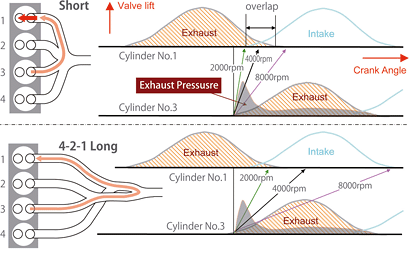
fig.3:Residual gas reduction by 4-2-1 exhaust system
4-2-1 Exhaust System
One option to significantly reduce residual gas is the adoption of a 4-2-1 exhaust system. As shown in Fig.3, when the exhaust manifold is short, the high pressure wave from the gas emerging immediately after cylinder No. 3’s exhaust valves open, for example, arrives at cylinder No.1 as it finishes its exhaust stroke and enters its intake stroke. As a result, exhaust gas which has just moved out of the cylinder is forced back inside the combustion chamber, increasing the amount of hot residual gas. With a short exhaust manifold, the high pressure wave arrives at the next cylinder within a short amount of time, causing this adverse effect to continue from low to high engine speeds. However, with a long 4-2-1 exhaust system, since it takes time for the high pressure wave to reach the next cylinder, the effect mentioned is limited to extra-low engine speeds, making the reduction of residual gas at almost all engine speeds possible.
In addition, a pipe length of over 600mm was necessary to elevate actual-use torque, but space was saved by adopting a loop shape.
The major issue with the 4-2-1 exhaust system is that the long distance cools the exhaust gas before it reaches the catalyst, delaying the catalyst’s activation. Exhaust gas temperature can be increased by delaying the ignition timing, but too much retardation causes unstable combustion. For SKYACTIV-G, stable combustion was realized even when the ignition timing after engine-start is considerably delayed.
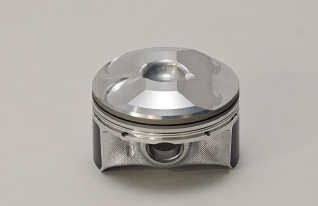
This was made possible by adopting a piston cavity (Fig.4) and optimizing fuel injection in order to formulate a stratified air-fuel mixture around the spark plug. Furthermore, the piston cavity resolved the issue of the initial flame coming in contact with the piston head and generating a cooling loss.
Combustion Improvement
To improve resistance to knocking, shortening of combustion duration was also attempted. The faster the combustion, the shorter amount of time the unburned air-fuel mixture is exposed to high temperatures, allowing for normal combustion to conclude before knocking occurs. Specifically, aside from creating a more homogeneous mixture by means of intensifying air flow, increasing injection pressure, and using multi-hole injectors to enhance fuel spray characteristics, a piston cavity is used to prevent the initial combustion flame from hitting the piston and interfering with the flame’s growth.